
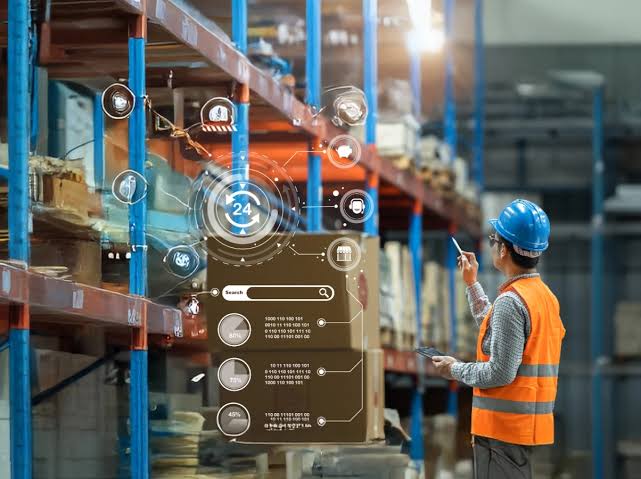
Consider the possibility of a warehouse where robots are able to move with great speed around the many aisles, precisely restocking shelves, or a delivery route that is optimised in real-time to avoid traffic, so that your package arrives just in time. These are not the characters or situations from a science fiction film but rather the present reality created by AI. Thanks to the power of AI, the inefficiencies of the logistics industry are soon a thing of the past.
The basic definition of artificial intelligence is the ability of AI-driven machines to mimic human intelligence and learn from it. These smart systems can accomplish what a human would normally do with their intelligence, including visual perception, speech recognition, decision-making, and language translation. AI in logistics is actually the use of artificial intelligence technologies such as machine learning, robotics, and data analytics, which can be used to optimize and improve logistics processes.
AI has made impressive strides in logistics, transforming the supply chain as a whole. AI is transforming business operations by streamlining inventory management, optimizing transportation routes, and boosting customer service, among other applications. The use of AI by companies helps predict demand more precisely, lower operational expenses and offer a more personal experience to customers. This means that companies can adjust more quickly to market fluctuations, minimize waste and ensure products are delivered more quickly and reliably.
In this blog, we will delve deeper into the true role of AI in logistics, exploring the key areas where it is making the most significant impact. The countless benefits it can bring, the difficulties it poses and examples of its use in the real world will be discussed. Let’s dive in and learn how AI is more than just a tech evolution, but a paradigm change in logistics operations, ensuring a smarter, more efficient future.
Key Areas Where AI is Making an Impact
The logistics sector is experiencing a transformation driven by artificial intelligence (AI), which is impacting numerous aspects of the field, such as inventory management, warehouse operations, transportation and delivery, and customer service. All of these are experiencing the benefits of AI in improving efficiencies, accuracy, and decision-making.
Inventory Management
AI is playing a significant role in optimizing inventory management processes. Through machine learning algorithms, companies can also more accurately predict customer needs, ensuring that they have the right inventory in place at the right time.
This forecasting feature helps to minimize excess stock and stockout conditions, thereby lowering inventory carrying costs and enhancing the customer experience. Moreover, AI-driven systems can automate stock replenishment by ordering new stock when it hits the threshold, saving time and effort. This will decrease the need for manual supervision and human error.
Warehouse Operations
One of the major applications of AI in the warehouse is through the use of robotics and automation.AI is being implemented in the warehouse through robotics and automation. AI robots are faster and more accurate with picking, packing, and sorting products than humans. They come with sensors and cameras that enable them to move around the warehouse effectively, and avoid obstacles to optimize warehouse routes.
AI can also be used to optimize storage space by analyzing data to identify the most efficient way to store items based on their size, weight, and frequency of use. Moreover, AI-driven predictive maintenance has the capability to anticipate equipment failures before they occur, minimizing downtime and maintenance expenses.
Transportation and Delivery
AI is revolutionizing transportation and delivery by optimizing routes and providing real-time tracking, which are essential elements of logistics. AI can also monitor traffic flow, weather conditions, and delivery needs to identify the best possible routes for vehicles, which helps to minimize fuel usage and delivery times.
AI-powered autonomous vehicles and drones are more and more feasible, with the potential to make delivery processes even more streamlined. Additionally, AI enables real-time tracking and visibility, providing both companies and customers with up-to-date information on the status of shipments. This is transparency that enhances reliability and trust in delivering.
Customer Service
AI is also revolutionizing customer service for the logistics sector. AI chatbots and virtual assistants can respond to customer inquiries instantly, resolve common problems, and respond to a multitude of questions. These systems leverage the power of NLP to understand and respond to customer queries, providing a more personalized and efficient customer experience.
Not just that, but artificial intelligence can use customer data to anticipate and prevent potential problems before they arise, leading to higher customer satisfaction. Another major advantage of AI in customer service is its ability to proactively resolve customer issues, for example, notifying customers of potential delivery delays and offering alternative options.
Benefits of AI in Logistics
The logistics sector is already making significant strides with the introduction of artificial intelligence (AI), and its impact is poised to transform the field with a host of advantages that boost overall performance capabilities. Some of the advantages are improved efficiency, accuracy, decision making and scalability. Such benefits are leading the industry in a more streamlined, reliable and responsive supply chain.
Increased Efficiency
AI helps to streamline logistics workflows by automating repetitive and time-consuming tasks. In a warehouse setting, for example, AI-powered robots can pick, pack, and sort items at a much quicker rate than human employees. Transportation route optimization algorithms find the shortest and most economical routes for deliveries. Moreover, automated stock management systems help achieve timely replenishment, minimizing downtime and manpower. AI can reduce delays and optimise logistics processes to boost efficiency.
Enhanced Accuracy
In the field of logistics, the accuracy provided by AI is unmatched. AI systems can process large volumes of information with a high degree of accuracy, minimising the risk of human error. AI algorithms can also improve the accuracy of forecasting demand trends in inventory management, keeping stock levels optimized. AI-driven robots and systems can precisely manage warehouse goods, reducing the risk of mistakes in order fulfillment. Additionally, AI can improve the accuracy of transportation by real-time traffic data and potential disruptions, enabling more accurate delivery schedules.
Better Decision-Making
AI empowers logistics companies with data-driven insights, leading to more informed decision-making. By leveraging historical data and trends, machine learning models can generate predictive analytics, enabling businesses to foresee future demand, pinpoint potential risks, and fine-tune their supply chain plans accordingly. AI can predict the demand surges in certain products, for instance, so companies can prepare accordingly. Furthermore, AI-based decision support systems can make recommendations on logistics optimization, such as optimizing inventory or redirecting shipments, to improve efficiency and cost-effectiveness.
Scalability
AI is helping to scale logistics by enabling businesses to expand their capabilities without a corresponding increase in costs. Automated systems can easily handle more transactions and goods, and facilitate business expansion. AI can adapt to changing demand levels, ensuring that business remains efficient and delivers a quality service. For instance, during peak seasons, AI can scale up warehouse operations and transportation logistics to meet increased demand. Scalability is a key aspect of this, allowing logistics companies to expand and adjust to market fluctuations with ease.
Challenges and Considerations
The adoption of AI in logistics has several challenges and considerations, but the benefits are significant. Some of the major challenges are the cost of implementation, privacy and security of data, job displacement due to automation, and regulatory and ethical considerations. Businesses must tackle these challenges head-on to harness the potential benefits of AI and reduce risks.
Implementation Costs
The initial investment is one of the major hurdles in the implementation of AI in logistics. The costs of developing and integrating AI systems are also significant, ranging from the expense of acquiring cutting-edge hardware and software to training personnel.
Fitting AI into current systems can also involve extra costs and be time-consuming and complex. These costs may be unaffordable for small and medium-sized enterprises for many businesses. Additionally, there is a continuous investment in the AI systems required for maintaining their effectiveness and security, further increasing the financial investment.
Data Privacy and Security
Data is a critical component of AI systems in logistics. This dependency brings about major information protection and security issues. Bob’s businesses must safeguard sensitive data, including supply chain details, inventory levels, and customer information, from unauthorized access and cyber threats. Best practices for data privacy include strong encryption methods, access controls, and adherence to data protection laws such as the GDPR.
Furthermore, there is a need to have a clear policy for data governance by logistics firms that will help them to effectively tackle data collection, storage, and application while also ensuring privacy protection, without affecting the performance of AI systems.
Rights and Responsibilities in Regulation and Ethics
The implementation of AI in logistics must also navigate a complex landscape of regulatory and ethical issues. Following the laws and regulations related to the usage of the AI is a must to prevent legal consequences. This involves compliance with safety, data security and labour laws standards.
Ethical considerations include ensuring that AI systems are used fairly and transparently, and avoiding bias and discrimination. In addition to privacy, companies need to address the social consequences of AI, including issues of sustainability and ethical considerations surrounding decision-making automation. Establishing ethical guidelines and frameworks for AI applications in logistics can help alleviate these concerns and build trust.
The Future of AI in Logistics
The future of AI in logistics looks promising with exciting trends, possible advancements, and sustained influences poised to revolutionize the sector. Continued progress of AI technologies will bring more opportunities for innovation and efficiency, enabling logistics to be agile, responsive and sustainable.
Emerging Trends
There are several trends emerging in the field of AI for logistics that will shape its future:
Advanced Robotics: AI-driven robots will be more capable and dexterous, working in warehouses and distribution centres. These robots will complement the work of human employees and perform more complex tasks, thereby enhancing productivity.
AI-powered Supply Chain Networks: AI will help craft very connected and smart supply chain networks. These networks will use the realtime data to maximize the efficiency of each stage of the supply chain – from procurement to manufacturing to distribution and delivery.
Predictive Analytics and Machine Learning: With the increasing use of predictive analytics and machine learning, logistics companies will be better equipped to predict fluctuations in demand, manage risk, and optimize inventory levels with increased precision.
Autonomous Vehicles and Drones: Autonomous delivery vehicles and drones will be more prevalent in logistics, eliminating the need for human drivers and enhancing delivery efficiency. These technologies will be especially helpful in the last mile delivery process, which demands speed and flexibility.
Potential Developments
There are many possibilities for future advancements in AI that are relevant to logistics
Improved Real-Time Tracking: IoT and AI technologies will facilitate more accurate and up-to-the-minute monitoring of goods in the supply chain. This will enhance visibility and enable companies to track shipments more precisely and take immediate action in case of disruptions.
AI Customer Insights: AI will deliver more comprehensive and detailed information about customer behaviour and preferences, which will allow logistics companies to tailor their services accordingly. Predictive models will assist in forecasting of customer requirements and customizing logistics accordingly.
Sustainability and Environmental Impact: AI will play a role in promoting more sustainable logistics practices, such as optimizing routes to minimize fuel usage, managing inventory with efficiency, and assisting in the adoption of environmentally friendly transportation methods.
Blockchain Integration: AI will also be integrated with blockchain technology, which will improve the transparency and security of the supply chain. Blockchain can be used to create an immutable record of the transactions, while AI can be used to analyze and verify the data to ensure that it is not fraudulent or inaccurate.
Long-Term Impact
The future of AI in logistics is bright and transformative, with the potential to fundamentally change the way logistics work:
Greater Automation and Efficiency: Automation will become standard practice for all logistics operations and eliminate manual work and costs. From order processing to delivery, AI-powered systems will handle it all, ensuring optimal efficiency and accuracy.
Data-Driven Decision Making: More and more, data-driven decision making will be used by the logistics industry. The data will be too much for humans to handle and use, and AI will help companies make informed decisions that they can use to move with the changing market.
Improved Customer Experience: AI will transform the logistics customer service landscape by providing more personalized and responsive support. Customers will benefit from quicker delivery, increased transparency, and services that are more in tune with their needs.
Smart and Resilient Supply Chains: AI will enable more resilient and adaptive supply chains that would be agile in reacting to disruptions. Predictive analytics will be used to prevent disruption and reliability issues by detecting potential risks, developing proactive strategies and solutions.
Conclusion
Artificial intelligence (AI) is making a significant impact on logistics, transforming various aspects like inventory management, warehouse operations, transportation and delivery, and customer service. AI can boost efficiency by automating repetitive tasks and optimizing processes, reduce human error by ensuring accuracy, aid in data-driven decision making, and ensure scalable growth to meet increasing demands.
While AI in logistics offers many advantages, there are also challenges and considerations to keep in mind. To achieve sustainable and responsible use of AI technologies, the high initial investment costs, privacy and security of data, and the ethical and regulatory concerns need to be carefully addressed.
In conclusion, the future of AI in logistics is full of potential and promising trends. The industry is about to be revolutionized by advanced robotics, AI-powered supply chain networks, predictive analytics, autonomous vehicles, and improved real-time tracking. Customer insights powered by AI and blockchain technology will continue to improve logistics operations with greater transparency, security, and personalization. The long-term consequences of AI will be better supply chains and improved customer experience, with more efficient, data-driven and resilient chains following all the way through to a sustainable future.
All in all, AI is a transformation that is transforming the logistics sector. The ability of AI to process vast amounts of data, make informed predictions, and automate tasks creates an opportunity for logistics providers to optimize their operations more than ever before.With the power of AI, logistics companies can achieve unprecedented levels of efficiency, accuracy, and scalability, setting themselves up for success in an increasingly competitive and dynamic market. As businesses navigate these shifts and tackle the challenges that come with them, it will be essential to realize these changes and overcome the hurdles to fully harness the potential of AI in the logistics industry.
Frequently Asked Questions
FAQ 1. What are the benefits of AI in logistics?
AI enhances logistics efficiency by automating repetitive tasks, optimizing routes, and providing precise inventory management. For example, in a warehouse, robots can pick, pack and sort orders much quicker than humans do. Route optimization algorithms can be used to identify the most efficient routes, which can help to reduce delivery times and fuel consumption. Furthermore, automated inventory systems help minimize manual tasks and downtime by ensuring timely restocking of goods, improving overall efficiency.
FAQ 2. What are the major issues in the adoption of AI in logistics?
Some of the most significant barriers to the adoption of AI in logistics include the high cost of implementation, privacy and security risks, automation’s impact on jobs, and regulatory and ethical considerations. There is a significant cost and time commitment to developing and integrating AI systems. Preventing cyber threats is essential as it is critical to safeguard sensitive data. The shift to AI-powered operations may even result in job losses, requiring plans for retraining and upskilling the workforce. Legal and ethical regulations need to be adhered to to prevent potential legal consequences and to promote ethical and responsible usage of AI.
FAQ 3. What are the ways in which AI can improve customer service in logistics?
The AI-powered approach improves customer service by delivering personalized and responsive support. AI-powered chatbots and virtual assistants can handle a variety of customer inquiries, offering instant responses and resolutions to common issues. These systems use natural language processing to understand and respond to customer queries, improving the customer experience. Moreover, AI can leverage customer information to foresee potential challenges and proactively resolve them, like informing customers about delays and offering workarounds to increase customer satisfaction.
FAQ 4. What can be the future consequences of AI in logistics?
AI’s future in logistics could involve more automation and efficiency, data-driven decisions, improved customer experiences, and more adaptive and resilient supply chains. Most logistics activities will be automated by AI, which will minimise manual activities and operating costs. Data-driven insights will be more and more the key to industry decision making. This will create advantages for customers, such as quicker delivery, more transparency and custom-made services. AI will also develop supply chains that are agile and resilient, ensuring continuity and reliability.
FAQ 5. What role is AI playing in shaping the future of logistics with regards to sustainability?
AI will have a major impact on improving the sustainability of logistics operations. AI helps to optimize routes, minimizing fuel consumption and emissions, thereby promoting a more environmentally friendly transportation system. With AI-based inventory management, you can ensure optimal stock levels, which helps reduce excess inventory and the resulting waste. What’s more, AI can help facilitate the shift towards sustainable modes of transport like electric vehicles and drones, thereby minimizing the environmental footprint of logistics activities. Overall, AI will play a crucial role in promoting sustainable practices within the logistics industry.